Dispatch — Long Read
15 Groundbreaking Apple TV Shows You Probably Didn't Know About
Some of the best shows from Apple TV+ huge catalogue.
The Cinéprism
21 / 11 / 2025 · 18 min read
1. 🎬 Pluribus (2025- )

Carol Sturka wakes up to find that humanity has been transformed overnight by an extraterrestrial virus called "the Joining," creating a peaceful hive mind that seeks to gently assimilate the thirteen immune individuals remaining. Vince Gilligan's post-apocalyptic vision inverts typical alien invasion narratives, presenting a scenario where the "threat" is universal contentment and connection rather than violent conquest, where resistance means choosing loneliness and individuality over harmonious collective consciousness. Rhea Seehorn, reuniting with Gilligan after her career-defining work on Better Call Saul, plays Carol with the precise emotional calibration she's known for, embodying a woman whose immunity is both blessing and curse, who must decide whether preserving her individual consciousness is worth remaining isolated in a world where everyone else has found peace. The series' title, referencing "e pluribus unum" (out of many, one), signals its thematic concerns about identity, community, and whether individual consciousness is something to be treasured or transcended.
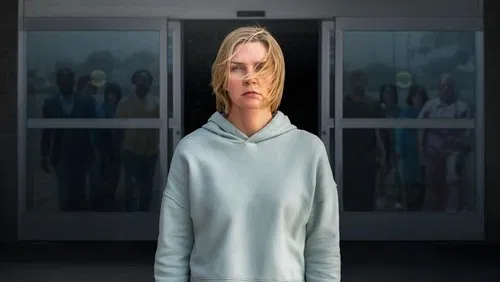
What makes Pluribus fascinating is its refusal to present the hive mind as straightforward antagonist. The "Others," as the transformed humanity calls itself, are genuinely peaceful, content, and free from the conflicts that plagued pre-Joining civilization. They don't force assimilation through violence but through patient invitation, showing Carol and the other immune individuals what they're missing by remaining separate. Gilligan uses his signature visual storytelling and meticulous attention to detail to create Albuquerque as both familiar and profoundly alien, a city where infrastructure still functions and people still smile, but where individual identity has dissolved into something larger. The series explores uncomfortable questions about whether human consciousness as we know it is worth preserving if the alternative is universal peace and understanding, whether our attachment to individuality is enlightened or just evolutionary programming we should be willing to outgrow. Seehorn's performance captures Carol's internal war between her horror at humanity's transformation and her growing recognition that those who've joined seem genuinely happier than they were before. The show uses science fiction premises to examine contemporary concerns about technology eroding individual identity, social media creating hive-mind thinking, and whether increased connectivity brings us together or dissolves the boundaries that make us distinct. It's about what makes us human, whether consciousness requires separation or can exist within collective, and whether choosing to remain apart when everyone else has found connection is heroic resistance or stubborn refusal to evolve beyond the isolation that has always defined human existence.
2. 🎬 Presumed Innocent (2024)
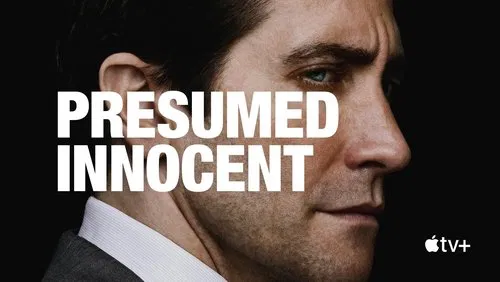
Rusty Sabich, a chief deputy prosecutor, becomes the prime suspect when his colleague and former lover is brutally murdered, forcing him to navigate a legal system he once controlled from the other side. David E. Kelley adapts Scott Turow's novel into a taut legal thriller that examines how quickly reputation crumbles when accusation carries more weight than evidence. Jake Gyllenhaal plays Rusty with controlled desperation, a man whose professional competence in prosecuting others becomes useless when he's the one in the dock, when every skill he's honed can be weaponized against him. Ruth Negga's prosecuting attorney understands that cases are won through narrative construction as much as evidence, making Rusty's personal failings the story rather than the facts.
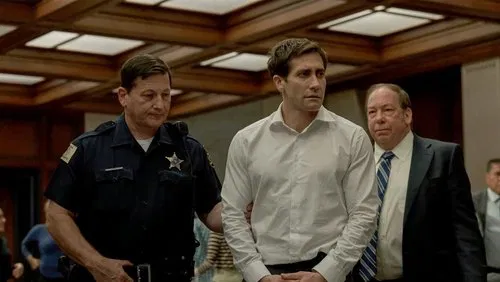
What makes Presumed Innocent gripping is its exploration of how the legal system we trust to deliver justice is actually a theatrical performance where the most compelling storyteller wins regardless of truth. The series doesn't just ask whether Rusty committed murder; it asks whether innocence matters when guilt can be convincingly performed, whether anyone accused survives even when acquitted, and how marriage endures when secrets that should have remained private are exposed in court. Bill Camp and Renate Reinsve provide the series' emotional anchors as Rusty's colleague and wife, both dealing with betrayals that complicate simple categories of victim and perpetrator. The show succeeds because it understands that legal thrillers work best when they're about more than guilt or innocence, when they're examining how institutions we create to protect justice can become instruments of destruction for anyone caught in their machinery.
3. 🎬 Foundation (2021- )
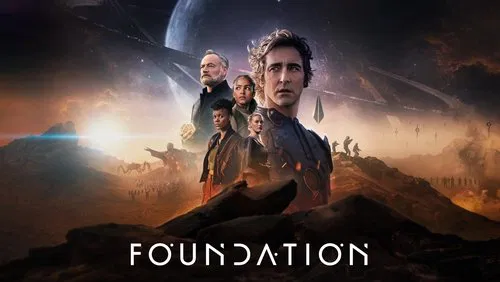
Hari Seldon, a mathematician, predicts the Galactic Empire's collapse and establishes a Foundation to preserve knowledge and shorten the coming dark age, but his plan faces opposition from an immortal Emperor and unforeseen variables. David S. Goyer adapts Isaac Asimov's sprawling saga with visual ambition that matches the source material's epic scope, using multiple timelines spanning centuries to show how Seldon's psychohistory equations collide with human unpredictability. Jared Harris's Seldon embodies the mathematician prophet, a man whose certainty about large-scale patterns makes him dangerous to power but blind to individual human factors that disrupt his calculations. Lee Pace creates a fascinating triple performance as the Empire's cloned rulers at different life stages, showing how immortality through genetic duplication creates both continuity and stagnation.

Lou Llobell's Gaal Dornick provides the audience's entry point, a mathematician whose faith in Seldon's equations gradually transforms into questioning whether predicting the future means accepting it. What makes Foundation compelling is its willingness to grapple with genuinely big ideas about determinism versus free will, whether history is shaped by great individuals or inevitable forces, and whether trying to engineer society's future is enlightened or tyrannical. The series uses its science fiction framework to examine contemporary questions about empire, decline, religious fundamentalism, and whether technology can solve problems that are fundamentally human. The show's visual spectacle, particularly the Empire sequences, creates a sense of scale that television rarely attempts, showing civilization's rise and fall as geological process playing out across millennia.
4. 🎬 For All Mankind (2019- )

An alternate history where the Soviet Union lands on the moon first, triggering a space race that never ends, transforming humanity's relationship with space exploration and Earth itself. Ronald D. Moore's series uses the "what if" premise to examine how technological competition drives innovation while extracting human costs, how geopolitical rivalry extends beyond Earth, and whether achieving great things requires systems that destroy individuals. Joel Kinnaman's Ed Baldwin embodies the test pilot generation whose courage is inseparable from toxic masculinity and inability to process trauma except through achievement. Shantel VanSanten, Sarah Jones, and Jodi Balfour play women who break barriers in the alternate timeline, though the series doesn't pretend sexism disappears simply because women are in space; it shows how institutions change slowly even when technology leaps forward.

What makes For All Mankind exceptional is its commitment to consequences; decisions made in early seasons echo through later ones, characters age in real time, and the series never resets to a comfortable status quo. Each season jumps forward a decade, showing how sustained commitment to space exploration transforms technology, culture, and politics in ways both inspiring and troubling. The show uses space as arena to explore earthbound concerns: union organizing, LGBTQ+ rights, immigration, corporate exploitation, and how nationalism shapes scientific endeavor. It asks whether humanity's drive to explore is noble aspiration or extension of the same imperial impulses that have caused harm on Earth, and whether achieving impossible things is worth what we sacrifice to get there.
5. 🎬 Slow Horses (2022- )
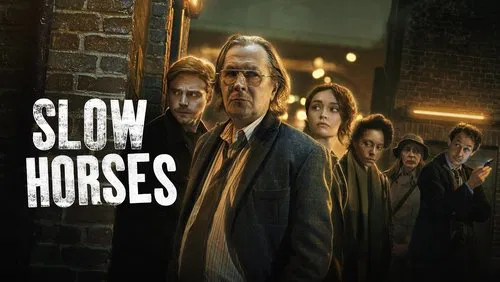
MI5's failures and disgraced agents are exiled to Slough House, a dumping ground department handling meaningless paperwork under Jackson Lamb, a deliberately offensive and apparently washed-up spymaster who might be more capable than he appears. Graham Yost adapts Mick Herron's novels with perfect tonal balance between spy thriller tension and dark comedy about bureaucratic failure. Gary Oldman's Lamb is gloriously disgusting and brilliant, a man who uses his slovenly appearance and crude behavior as camouflage for tactical genius, whose cruelty toward his "slow horses" is partly protective measure to keep them from getting killed in field work they're unprepared for. Jack Lowden's River Cartwright embodies the talented failure, someone whose one mistake defines them despite genuine skill, whose desire to prove himself makes him vulnerable to manipulation.

The ensemble cast, including Kristin Scott Thomas as MI5's ruthlessly ambitious second-in-command, creates a world where intelligence work is less James Bond glamour and more petty office politics with occasionally lethal consequences. What makes Slow Horses addictive is its understanding that espionage is mostly tedious work punctuated by moments of terror, that institutions protect themselves by sacrificing individuals, and that the people dismissed as failures often see clearly precisely because they're no longer invested in maintaining comfortable fictions. The series uses spy thriller conventions to examine themes of redemption, loyalty, and whether organizations deserve the dedication of people they've discarded, all while maintaining breakneck pacing and genuine suspense.
6. 🎬 Ted Lasso (2020-2023)
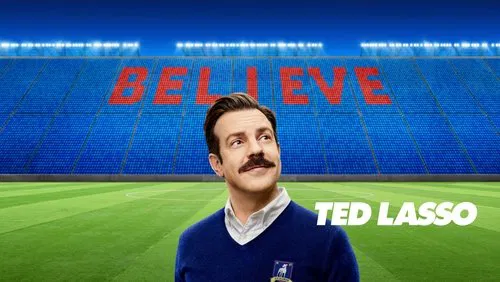
Ted Lasso, an American college football coach with no soccer experience, is hired to manage a struggling English Premier League team by an owner who wants the team to fail as revenge against her ex-husband. What could have been one-joke comedy about American ignorance transforms into something more profound: an examination of how optimism is a choice, how kindness is a strategy, and how emotional intelligence matters more than technical expertise. Jason Sudeikis's Ted is relentlessly positive without being naive, a man whose folksy wisdom and belief in people's better natures gradually transforms a cynical environment. Hannah Waddingham's Rebecca begins as antagonist but reveals depths as someone wounded by betrayal who's forgotten how to be kind even to herself.
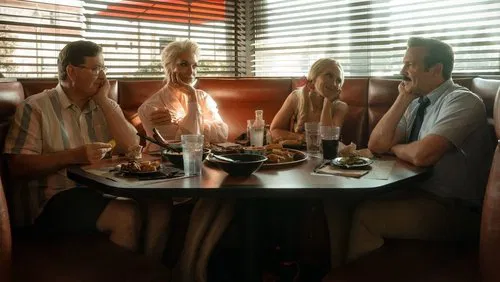
Brett Goldstein's Roy Kent, a fading player forced to confront aging and irrelevance, becomes the show's emotional anchor, showing that gruffness can coexist with deep feeling. What makes Ted Lasso resonate beyond its sports framework is its commitment to showing how people heal from trauma, how healthy masculinity means being vulnerable rather than stoic, and how communities form when individuals choose connection over self-protection. The series doesn't pretend positivity solves everything; Ted's own panic attacks and depression reveal that even optimists struggle, that believing in others doesn't mean you believe in yourself. The show's final season faced criticism for losing focus, but the series' legacy is its insistence that cynicism isn't wisdom, that kindness isn't weakness, and that sometimes the most revolutionary thing you can do is treat people as if they're capable of being better than they've shown.
7. 🎬 Dark Matter (2024)
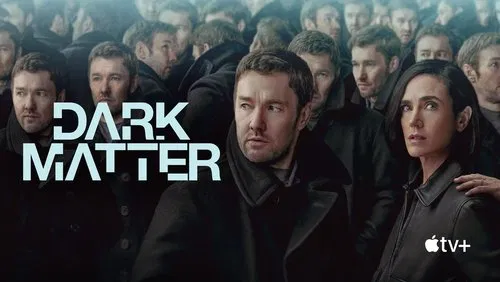
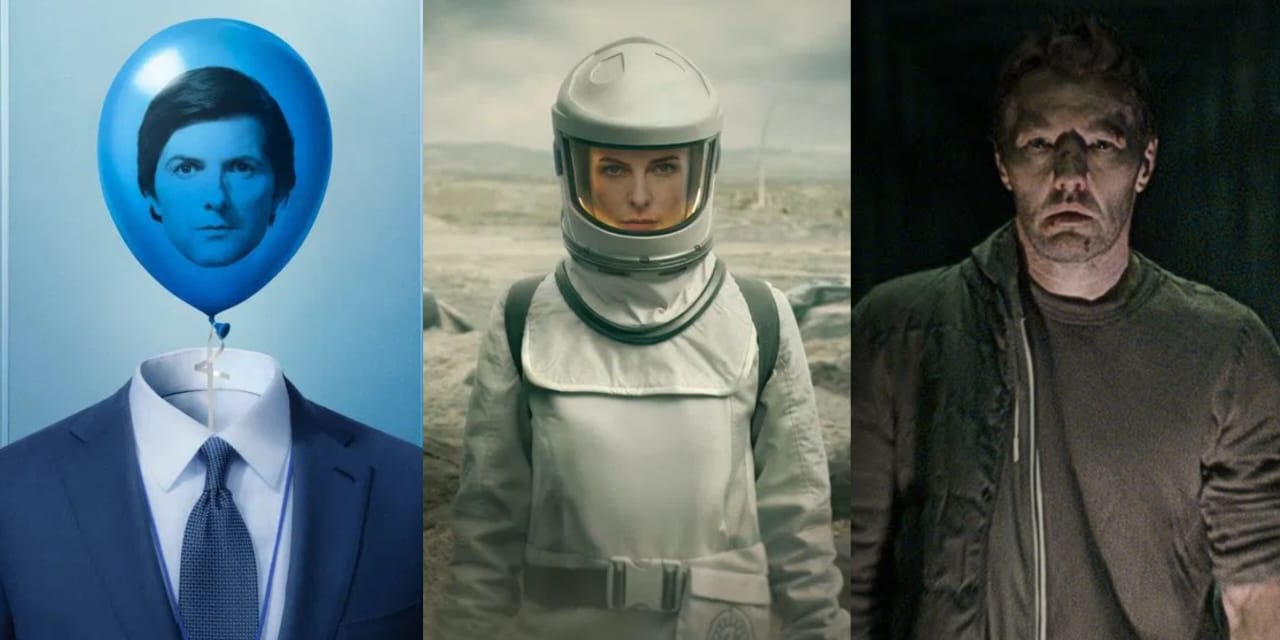
Jason Dessen, a physics professor living a modest life, is abducted and wakes up in a world where he's a celebrated scientist who made different choices, launching him on a journey through the multiverse trying to get back to his family. Blake Crouch adapts his own novel with appropriate sense of paranoia and wonder, using the multiverse concept to explore how our choices define us and whether the paths not taken represent better or just different lives. Joel Edgerton plays Jason with everyman relatability that makes the science fiction premise emotionally grounded, a man whose love for his family becomes literal force propelling him through infinite variations of existence. Jennifer Connelly's Daniela exists in multiple versions, some fulfilled by choices the "main" Daniela didn't make, forcing both Jasons to confront whether their life together was compromise or genuine choice.

What makes Dark Matter compelling is its exploration of how we construct identity through choices, whether the person who chose differently is still "us," and whether there's such a thing as the "correct" version of your life or just infinite variations each requiring acceptance of what you sacrificed. The series uses quantum physics as framework for very human questions about regret, ambition, love, and whether the life we have is less important than how we live it. The show's production design creates infinite variations on familiar spaces, making the multiverse feel concrete rather than abstract, and the thriller pacing ensures philosophical questions don't slow momentum. It's about making peace with choices made, accepting that every decision forecloses other possibilities, and understanding that the life you have becomes the life that matters through the commitment you bring to it.
8. 🎬 Severance (2022- )
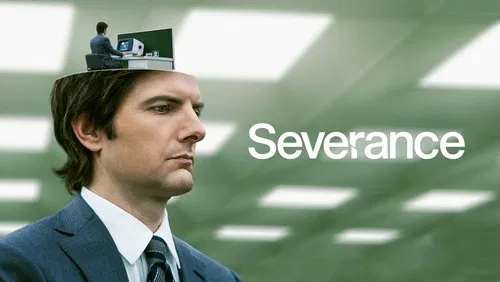
Employees at Lumon Industries undergo a procedure that surgically separates their work and personal memories, creating two consciousnesses that share one body but never remember what the other experiences. Dan Erickson's series is unsettling workplace satire that uses science fiction premise to literalize the compartmentalization modern work demands, examining what we're willing to surrender for employment and whether identity can survive being split. Adam Scott's Mark exists in perpetual present at work, a consciousness that only knows Lumon's hallways and mysterious data sorting, while his outside self grieves his wife and tries to forget through severance. Britt Lower, Zach Cherry, and John Turturro create the workplace ensemble trapped in environment that's simultaneously banal and nightmarish, where corporate culture is religious doctrine enforced through architecture designed to disorient and control. Patricia Arquette's Harmony embodies management as cult leader, a woman whose belief in Lumon's mission has consumed whatever person existed before severance.
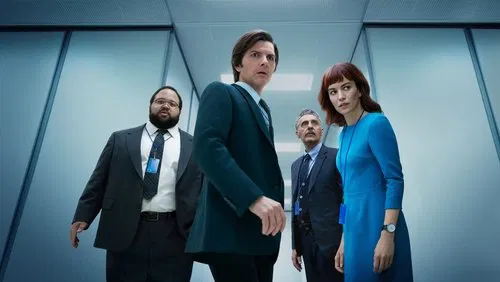
What makes Severance brilliant is its meticulous world-building that reveals information slowly, creating atmosphere of dread where every answer generates more questions, where the mundane and horrifying are indistinguishable. The series uses its high concept to explore how capitalism demands we fragment ourselves, performing different versions across contexts, and how that fragmentation damages identity in ways we don't recognize until it's too late. The production design creates Lumon as sterile maze of corporate aesthetics mixed with 1970s anachronism, a space that feels outside time and logic, where normal workplace absurdities are pushed to surreal extremes. It's about whether you can know yourself when parts of your consciousness are kept from you, and whether creating mental boundaries to survive work is adaptation or surrender.
9. 🎬 Silo (2023- )
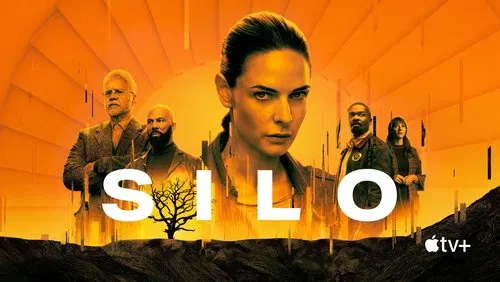
Ten thousand people live in an underground silo, believing the outside world is toxic and that their subterranean existence protects them, but when residents question the official narrative they're sent "outside" to clean the silo's external sensors before dying in the poisoned air. Graham Yost adapts Hugh Howey's novels with claustrophobic intensity, using the silo's vertical structure to create literal and metaphorical hierarchies where knowledge is controlled by those at the top while workers at the bottom maintain systems they don't understand. Rebecca Ferguson's Juliette Nichols, an engineer forced into the political role of sheriff, embodies working-class competence confronting institutional secrecy, a woman whose technical skills and stubborn questions threaten a social order built on accepted lies. Tim Robbins's Bernard represents authority that believes deception is necessary for survival, that some truths are too dangerous for the governed to know.
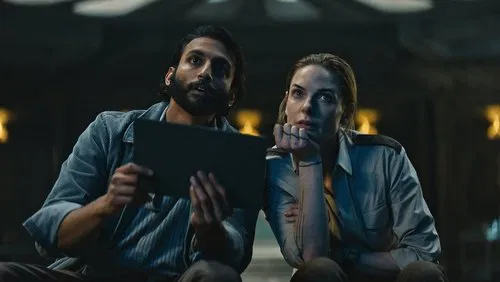
What makes Silo compelling is its patient revelation of how this society functions, the ways control is maintained through information restriction, physical separation of classes, and punishment of curiosity. The show uses its post-apocalyptic premise to examine contemporary questions about truth, authority, media manipulation, and whether societies can function when truth is treated as threat rather than foundation. The silo's architecture becomes character itself, the deep pit connecting floors a constant reminder of depths below and heights above, the spiral staircase making physical the effort required to move between levels. It's about how systems perpetuate themselves by controlling information, how those who maintain infrastructure understand systems better than those who claim authority, and whether stability achieved through lies is worth the cost of truth's suppression.
10. 🎬 The Crowded Room (2023)
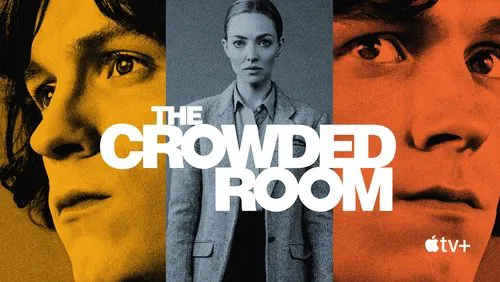
Danny Sullivan is arrested for a shooting in 1979 New York, leading to psychological evaluation that reveals his dissociative identity disorder and the trauma that created his multiple personalities. Akiva Goldsman adapts Daniel Keyes's work with ambitious structure that initially withholds Danny's condition, using unreliable narration to make viewers share his confusion about which identity is primary. Tom Holland delivers an impressive performance requiring him to embody distinct personalities, showing DID not as dramatic switches but as survival mechanism developed to compartmentalize unbearable experiences. Amanda Seyfried's interrogator serves as audience surrogate, her growing understanding of Danny's condition mirroring viewers' gradual comprehension. What makes The Crowded Room controversial is its depiction of DID, which mental health professionals have critiqued for potentially sensationalizing a complex condition and linking it to violence in ways that stigmatize those who live with it.

The series attempts to show trauma's impact and how minds fracture to protect themselves, but the thriller framework sometimes works against respectful representation. The show's strength lies in its exploration of childhood abuse and how early trauma shapes development in ways that persist into adulthood, how survival mechanisms that once protected can become prisons. The 1970s setting allows examination of how mental health understanding has evolved while also showing how far we still need to progress. It's about how the self is constructed in response to experience, how trauma doesn't just affect us but fundamentally shapes who we become, and whether integration of fractured identities is always the goal or if sometimes multiplicity is its own form of survival and adaptation.
11. 🎬 Disclaimer (2024)

Catherine Ravenscroft, a respected documentary journalist who exposes others' secrets, receives a novel that reveals her own dark secret from decades ago, threatening to destroy her career and family. Alfonso Cuarón directs with his characteristic visual mastery, creating a thriller that's as much about how we construct narratives as it is about the specific mystery being unraveled. Cate Blanchett plays Catherine with layers of control gradually cracking, a woman whose professional life is built on truth-telling but whose personal life is built on a carefully maintained lie. Kevin Kline's widower Stephen represents grief twisted into vengeance, a man who's created an entire narrative about what happened to his son based on partial information and consuming need to blame someone for his loss.
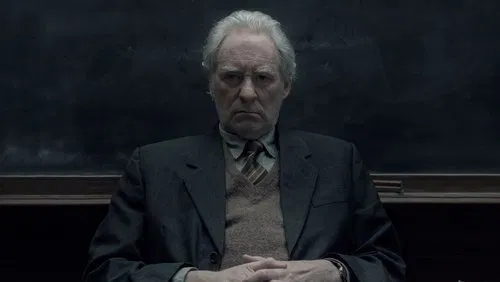
What makes Disclaimer fascinating is its examination of how we're all unreliable narrators of our own lives, how memory and truth are not identical, and how the same events can be framed in radically different ways depending on perspective and motivation. Cuarón's direction uses visual language to distinguish between different versions of past events, making clear that we're never accessing objective truth but always someone's interpretation filtered through their needs and biases. The series explores the ethics of documentary filmmaking and journalism, asking what rights storytellers have to others' stories and whether exposing truth justifies the harm that exposure causes. It's about how quickly reputations built over decades can crumble, how social media and public shaming have transformed how secrets are revealed and judged, and whether anyone survives having their worst moment made public, stripped of context, and turned into entertainment.
12. 🎬 The Studio (2025)
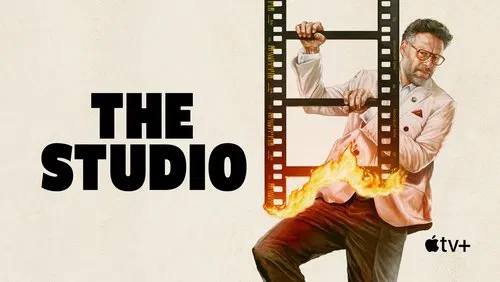
The inner workings of a Hollywood studio provide backdrop for examining how entertainment gets made, the creative compromises required, and the personalities who shape what reaches audiences. The series likely explores the tension between artistic vision and commercial demands, showing how decisions made in boardrooms affect what stories get told and who gets to tell them.
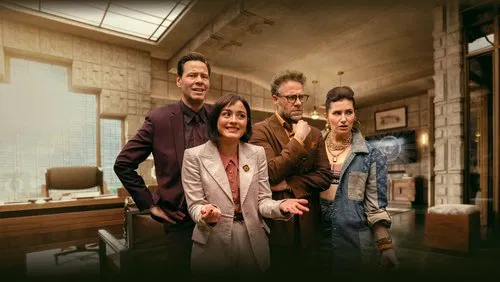
If following Apple TV+'s pattern, the show would balance industry satire with genuine affection for filmmaking, examining how capitalism shapes art while maintaining that art still matters even when commodified. It would likely explore contemporary issues in entertainment: streaming's impact on theatrical releases, representation battles, franchise fatigue, and how star power operates in an age of IP dominance.
13. 🎬 Chief of War (2025)

Jason Momoa's passion project exploring Hawaiian history and the islands' colonization would bring indigenous perspective to a story typically told from colonizers' viewpoint. The series likely examines how Western contact transformed Hawaiian society, the resistance to annexation, and the cultural genocide that accompanied American territorial acquisition.
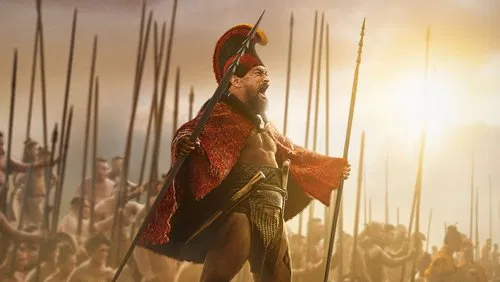
If realized with appropriate cultural consultation and indigenous creative control, the show could provide necessary counter-narrative to romanticized versions of Hawaiian history, showing how paradise tourism aesthetics obscure violent colonial history and ongoing
14. 🎬 Black Bird (2022)
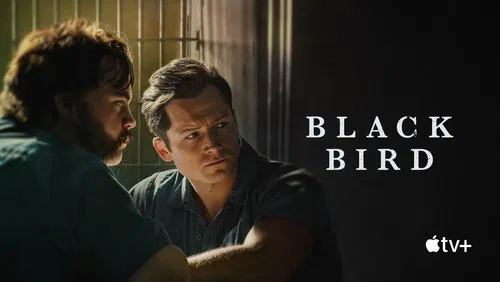
Jimmy Keene, a high school football hero turned drug dealer, is offered an extraordinary deal while serving a ten-year sentence: transfer to a maximum-security psychiatric prison, befriend suspected serial killer Larry Hall, extract a confession about the location of bodies, and earn his freedom. Dennis Lehane's adaptation refuses to sensationalize, instead focusing on the psychological game between two men, one performing friendship to escape prison, the other desperate for connection yet aware he's being used, creating a dynamic where every conversation is tactical warfare. Taron Egerton delivers a career-best performance as Jimmy, showing the psychological toll of maintaining a lie in an environment where one mistake means death or permanent imprisonment. His transformation from cocky dealer to someone genuinely disturbed by what he's learning is gradual and convincing. Paul Walter Hauser is absolutely chilling as Larry Hall, playing him not as obvious monster but as pathetic, needy man-child whose crimes emerge through disturbing details rather than theatrical confession.
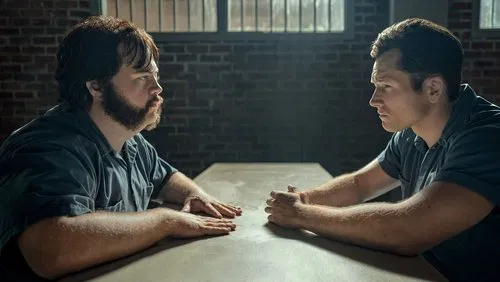
Hauser makes Larry simultaneously pitiable and terrifying, creating a character study of how serial killers can hide in plain sight through sheer ordinariness. Ray Liotta, in one of his final performances, brings weary authority to Jimmy's father, a retired cop whose pride in his son becomes desperate hope for redemption. The series' claustrophobic cinematography traps us inside the prison with Jimmy, the institutional greens and grays creating visual monotony that mirrors psychological pressure. What elevates Black Bird beyond true crime procedural is its exploration of performance and authenticity, how Jimmy must become a convincing friend to a killer while not losing himself in the process, and the haunting question of whether extracting truth justifies the psychological damage inflicted in its pursuit. The show understands that some truths come at prices too high to justify, and that getting confessions from serial killers requires descending to places that change you irreversibly.
15. 🎬 Pachinko (2022- )

Spanning generations from Japanese-occupied Korea to 1980s Japan, the series follows one Korean family's struggles with identity, discrimination, and survival as immigrants in a country that refuses to accept them. Soo Hugh adapts Min Jin Lee's novel with visual poetry and narrative structure that moves fluidly between timelines, showing how choices made in one generation echo through the next, how trauma and resilience are both inherited. Youn Yuh-jung and Minha Kim play Sunja at different ages, the grandmother whose teenage pregnancy in Korea sets the family's trajectory and whose strength in the face of endless discrimination becomes the family's foundation. Lee Min-ho's Hansu represents seductive danger, a man whose power and wealth offer escape but at costs that last lifetimes. Jin Ha's Solomon exists at the intersection of identities, a man who's achieved success in finance but discovers that no amount of assimilation makes him Japanese in a society that defines belonging through blood.

What makes Pachinko extraordinary is its patient, novelistic approach to storytelling, taking time to develop characters across decades, showing how historical forces shape personal lives and how individuals navigate systems designed to marginalize them. The series examines how diaspora communities maintain culture while adapting to hostile environments, how identity is negotiated between where you're from and where you live, and how discrimination persists across generations even as its forms evolve. The cinematography creates distinct visual languages for different time periods and locations, Korea's natural beauty contrasting with Tokyo's urban density, past shot with warm nostalgia while present maintains cooler, more uncertain tones. It's about survival, about how families endure when everything works against them, about maintaining dignity when society denies your humanity, and about how love and determination can't eliminate structural oppression but can create spaces of resistance and meaning within it.
— The Cinéprism
Keep reading
31 / 08 / 2026 · 383 reads
10 Best Endings in Film
A curated list of 10 unforgettable movie endings that leave a lasting impact long after the credits roll.
12 / 11 / 2025 · 5099 reads
Top 11 Greatest TV Shows:
These eleven extraordinary series redefine what television can be, merging unforgettable characters with stories that linger long after the screen goes dark.