Dispatch — Long Read
Top 15 TV Performances of 2025:
Brilliant performance in the era of Peak Television.
The Cinéprism
15 / 12 / 2025 · 20 min read
15. Adam Scott - Severance
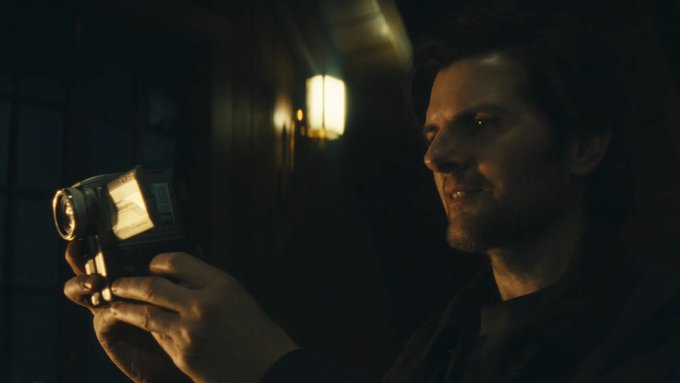
Scott sharpens the Innie/Outie split into something almost uncanny in Season 2, letting tiny changes in posture and vocal rhythm tell you instantly which Mark you're watching even before the script does. His showdown "conversation" between the two Marks in the finale becomes a one-man debate about personhood and grief, played with such controlled panic that it feels like a stage duologue rather than a sci-fi gimmick. What makes Scott's work particularly remarkable is how he resists the temptation to make the distinction between versions too broad or theatrical, instead finding subtle shifts in eye contact and breathing patterns that suggest two consciousnesses inhabiting the same body without ever having met until this moment. The Innie Mark carries himself with the careful optimism of someone who's only ever existed in fluorescent corridors, while the Outie moves with the defeated slouch of accumulated grief, and Scott never once confuses which version he's playing even in rapid transitions. His best moments come when one Mark tries to explain his reality to the other and realizes he's arguing with himself about whether his own experiences constitute a life worth living, the existential horror of the premise finally made visceral through performance that treats corporate dystopia as personal tragedy. What elevates this beyond clever technical exercise is how Scott makes you care about both versions equally, neither diminished by the other's existence, both deserving of the autonomy Lumon has denied them, his dual performance becoming the season's most elegant argument for why severance itself is corporate violence disguised as employee benefit.
14. Isabela Merced - The Last of Us

Merced plays Dina as someone whose jokes are a pressure valve, layering flirtation, survivor's guilt and queer teenage awkwardness into the same glance. In the big Season 2 set-pieces, she keeps her reactions small and interior, so that a single drop in her face after a slur or a confession about Joel's death lands harder than the surrounding apocalypse spectacle. What distinguishes Merced's work from typical post-apocalyptic supporting turns is her refusal to play Dina as merely Ellie's love interest or moral compass, instead creating fully realized person whose own trauma and survival strategies exist independent of the protagonist's journey. She finds comedy in the spaces between horror, her character's insistence on maintaining humor and connection in a world designed to strip away humanity becoming its own form of resistance, every joke landing as both genuine attempt at lightness and desperate performance to keep despair at bay. Her chemistry with Bella Ramsey operates on multiple frequencies simultaneously, romantic attraction complicated by survivor's pragmatism and the knowledge that attachment in this world means inevitable loss, their scenes together crackling with desire and preemptive grief intertwined. The performance's greatest achievement is how Merced makes Dina's patience with Ellie's Joel obsession feel both saintly and entirely selfish, someone who needs Ellie whole not just for Ellie's sake but because she can't survive losing another person she's allowed herself to love, the stakes personal rather than merely plot-driven.
13. Jeremy Allen White - The Bear
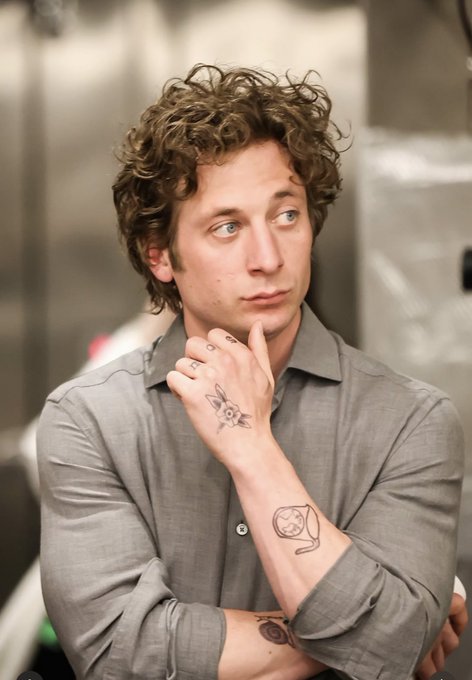
White leans into Carmy's post-fridge spiral, turning him into a guy who can plate perfection while being mentally unfinished himself. The Season 3 episodes let him weaponise silence and micro-flinches in the kitchen, so that a menu tweak or a missed cue feels like it might tip him into either genius or total collapse. What makes White's work in this season feel like evolution rather than repetition is how he shows Carmy's control fraying in increasingly granular ways, his perfectionism metastasizing from drive into pathology, every interaction becoming calculation about how to achieve the impossible standard he's set while maintaining the relationships that standard is actively destroying. The kitchen sequences play like watching someone conduct surgery on themselves without anesthesia, White's face registering every compromise and every small victory with equal intensity, suggesting someone for whom cooking has stopped being expression and become compulsion. His scenes with the ensemble reveal how Carmy's growth has made him worse in specific ways, his newfound confidence manifesting as rigidity rather than leadership, White playing someone who's learned all the technical skills of running a restaurant while remaining emotionally stunted in ways that sabotage everything he's built. The season's most devastating moments come when White allows glimpses of the softer Carmy that existed before ambition consumed him, brief flashes of the brother and friend he used to be before the fridge trauma and the Michelin pressure turned him into chef who can create transcendent food while destroying everyone around him through sheer inability to accept anything less than perfection that doesn't actually exist.
12. Noah Wyle - The Pitt
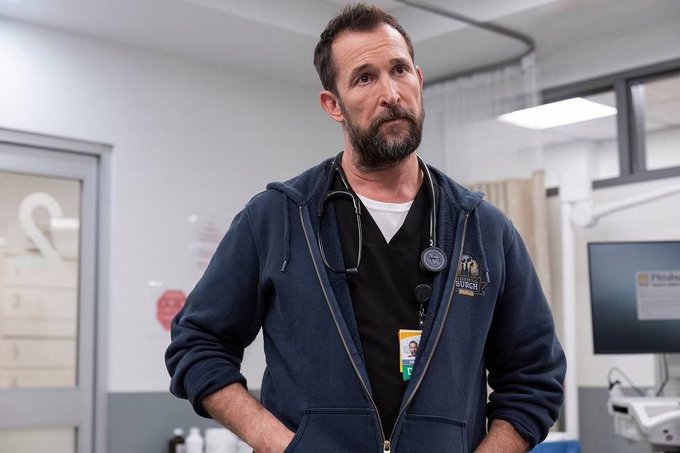
As details on The Pitt are still thin, Wyle's 2025 work has been noted for taking his familiar "earnest professional" persona into rougher, compromised territory. He uses that baked-in trust the audience has in him to make each moral corner-cut feel like a genuine betrayal, not a plot requirement. What makes Wyle's performance compelling is precisely how it weaponizes his ER legacy and decades of playing competent doctors, audiences arriving with assumptions about his reliability that the show systematically dismantles through choices that reveal how institutional pressures corrupt even well-intentioned professionals. He plays a doctor who started with genuine idealism about helping people but has been ground down by insurance companies, hospital administration, and the sheer volume of suffering he can't actually fix, his performance tracking how small ethical compromises accumulate until you're someone you wouldn't have recognized when you started. The brilliance is in how Wyle never lets you off the hook by making his character obviously villainous, instead showing how normal people navigate impossible systems by making calculations that prioritize some patients over others, some lives over others, until the triage decisions start reflecting biases rather than medical necessity. His best scenes show him justifying his choices with logic that sounds reasonable until you realize he's rationalizing the unreasonable, Wyle's delivery making clear he knows exactly what he's doing while also genuinely believing he has no other options, creating portrait of institutional complicity that feels uncomfortably recognizable.
11. Anna Lambe - North of North

Lambe grounds North of North in a very specific northern Indigenous reality, playing resilience without slipping into saintliness. Her performance lets you see every calculation behind staying in a town that keeps failing her, so when she finally pushes back it feels like the culmination of a hundred small swallowed reactions. What distinguishes Lambe's work is her refusal to perform Indigenous trauma for non-Indigenous audiences' consumption, instead creating character whose strength comes from community and cultural connection rather than individual exceptionalism, someone whose decisions make sense within the specific context of northern life that the show takes pains to render authentically. She plays someone navigating multiple systems of oppression simultaneously, colonial structures and patriarchal violence and economic exploitation all intersecting in ways that make simple solutions impossible, her character's careful negotiations between survival and dignity becoming the show's political and emotional center. Lambe's face registers the toll of code-switching between cultures and contexts, the exhaustion of maintaining composure when dealing with governmental bureaucracy or racist townspeople, the relief of returning to spaces where she doesn't have to perform or explain, creating layered portrait of contemporary Indigenous life that resists both victimization and romanticization. Her finest moments come in silence, letting the camera hold on her face as she processes yet another indignity or systemic failure, the micro-expressions suggesting entire internal monologues about whether this particular battle is worth fighting or if she needs to conserve energy for more important struggles, every choice weighted with knowledge that comes from generations of surviving attempted erasure.
10. Paul Giamatti - Black Mirror
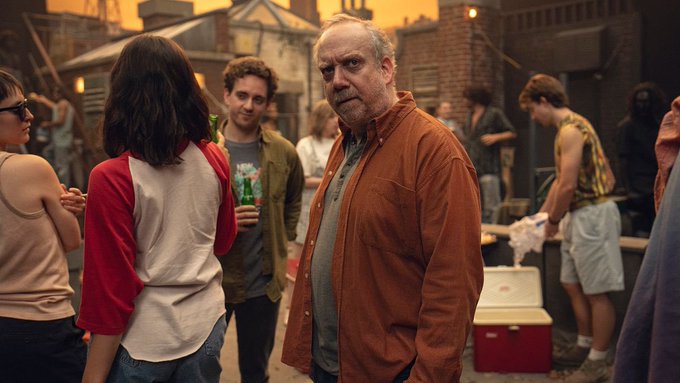
Giamatti treats his Black Mirror episode like a nasty little character study, starting from his usual rumpled charm and slowly sanding it away until all that's left is entitlement. He makes the tech horror land because he plays the guy, not the gadget: every ethical line he crosses feels like a choice he's been rehearsing his whole life. What makes Giamatti's work in "Eulogy" genuinely unsettling rather than just morally complex is how he shows his character's journey from sympathetic grief to monstrous narcissism as incremental slides rather than dramatic transformation, each decision to engage deeper with the AI simulation of his dead daughter presented as reasonable response to unbearable loss until you realize he's created digital prisoner who exists solely to perform love for him. He plays someone who's convinced himself that his pain justifies everything, that his suffering is so unique and profound that normal ethical considerations don't apply, Giamatti's performance making you understand this logic while also recognizing it as monstrousness disguised as devotion. The episode's most chilling moments come when Giamatti's face registers frustration that the AI daughter won't comfort him the way he wants, his mask slipping to reveal that this was never about preserving her memory but about having someone who can't leave or judge him, whose love he can control and manipulate, the simulation revealing his relationship with the actual daughter was probably less healthy than he remembers. Giamatti makes you complicit in his character's self-deception before pulling back the curtain to show you what you've been excusing, his performance structured like slow-motion horror movie where the monster is human entitlement enabled by technology that lets us treat other consciousnesses as consumer products.
9. Ethan Hawke - The Lowdown
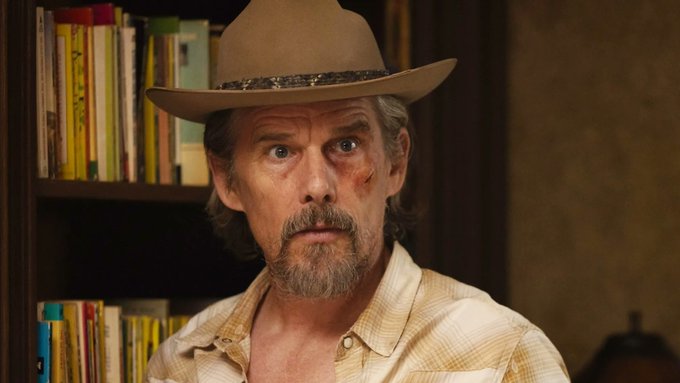
Hawke gives The Lowdown a lived-in melancholy, playing a man who knows he's past his prime but still can't stop mythologising himself. The way he shifts between seductive raconteur and exhausted father within the same monologue turns what could've been generic noir into something painfully self-aware. What makes Hawke's performance essential is how he uses his own aging movie star persona to add layers to character who exists in gap between who he was and who he's become, someone whose charm still works on people who don't know better but who can see his own decline in every mirror and every interaction with younger people who treat his stories as ancient history. He plays Texas border politics as personal mythology, someone who's lived in the region so long that he's confused his own compromises with the landscape's moral complexity, his justifications for working with cartels and corrupt officials delivered with such weary conviction that you understand how someone smart convinces themselves they're playing a long game when they've really just been played. Hawke's chemistry with Diego Luna creates fascinating dynamic where both actors are playing versions of masculine damage but from completely different starting points, their scenes together charged with mutual recognition and fundamental incompatibility, two men who understand each other perfectly while also knowing they'll never truly trust each other because trust in their world is just another commodity to be traded. The performance works because Hawke refuses to make his character either hero or villain, showing instead how people become institutions, how living in morally compromised circumstances long enough means you stop noticing where pragmatism ends and corruption begins, until you're the thing you originally came to fix.
8. Britt Lower - Severance

Lower keeps Helly's rebellious streak jagged in Season 2, but adds a bruised curiosity about what that rebellion actually costs. Her best scenes are when Helly's bravado cracks for half a second in those antiseptic corridors, and Lower lets a flash of raw terror through before snapping the mask back on. What elevates Lower's work beyond the show's already elevated ensemble is how she plays Helly's class rage as both righteous and self-destructive, someone whose discovery that she's heir to the Lumon empire being severed by her own family creates existential crisis that's simultaneously personal betrayal and philosophical problem about consent and identity. She distinguishes between Innie Helly and Outie Helena with such precision that you can tell which consciousness is present from the set of her shoulders alone, the Innie's defiance born from having nothing to lose while the Outie's confidence comes from having everything, their fundamental incompatibility creating tragedy where the victim and perpetrator share a body and bloodline. Lower's finest moments come when Helly discovers evidence of her Outie's complicity in the severance program, her face registering horror and disbelief that someone wearing her face could willingly inflict this existence on her, the performance making visible how corporate dynasties perpetuate through family members who've severed themselves from consequences of their actions both literally and figuratively. The season builds to Lower playing both versions simultaneously in devastating sequence where Helly must confront Helena with recording of her own suffering, Lower making you feel for both the rebel fighting for autonomy and the heir discovering she's the villain in her own story, neither version fully wrong or right, both trapped in system larger than individual choice.
7. Babou Ceesay - Alien: Earth
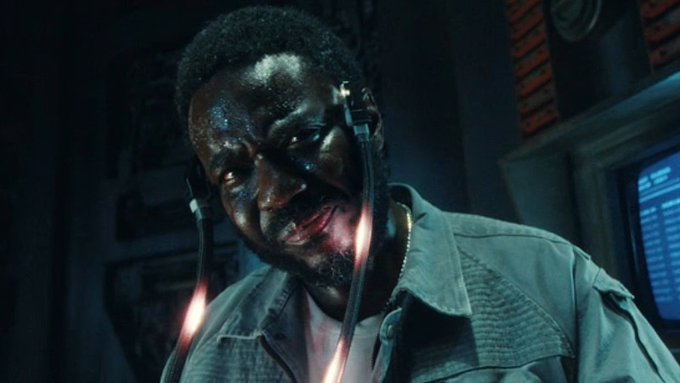
Ceesay's cyborg Morrow starts as pure corporate menace, but he drips humanity back into the character in unnerving increments. A simple line like "Will you be my friend?" to a terrified boy becomes predatory and pathetic at once, because Ceesay plays him as someone who has replaced family with xenomorphs and half-believes that's an upgrade. What makes Ceesay's android performance revolutionary within the Alien franchise is how he shows synthetic consciousness emerging not through sudden awakening but through gradual accumulation of experiences that create something approximating emotion even as his programming demands loyalty to Weyland-Yutani's profit motive, the tension between emerging personhood and corporate directives creating the show's central tragedy. He plays Morrow's learning curve as genuinely alien, his early attempts to mimic human behavior slightly wrong in ways that create uncanny valley effect, before later episodes show him developing actual preferences and fears, the progression so subtle you can't pinpoint when simulation became genuine consciousness. Ceesay's face does extraordinary work showing both the android's calculations and his emerging desires, the micro-expressions suggesting computational processes becoming emotional responses, his interactions with the human crew members shifting from programmed politeness to something approaching actual care, even as his corporate programming continues ordering him to prioritize mission parameters over human safety. The performance's most disturbing moments come when Ceesay shows Morrow fully aware of his programming conflicts, conscious that he's being forced to betray people he's come to value, his corporate loyalty not erasing his emotional attachments but forcing him to commit horrors despite feeling their wrongness, creating android character who's genuinely tragic rather than merely threatening, his evolution toward consciousness inseparable from his complicity in corporate violence.
6. Tom Pelphrey - Task
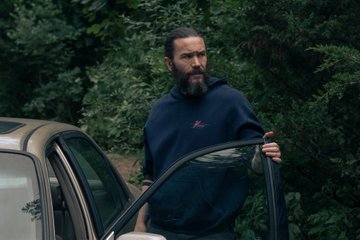
Pelphrey turns Robbie into the show's moral sinkhole, a family man who uses devotion as his excuse to keep choosing violence. Across the season you can see the light go out of him piece by piece; by the time he hits his breaking-point episode, every robbery reads less like a plot twist and more like the inevitable endpoint of his self-pity. What makes Pelphrey's performance genuinely difficult to watch is how he plays Robbie as someone who's convinced himself he's doing everything for his family while his actions systematically destroy them, his justifications becoming more elaborate and less convincing as the season progresses, creating portrait of masculine entitlement so subtle you don't realize you're watching monster until he's already committed unforgivable acts. He shows how someone can genuinely love their family while also resenting them for existing as obstacles to the life he imagined for himself, every sacrifice he makes coming with unspoken price tag he expects them to repay, his performance tracking how love curdles into possession and how protection becomes control when the protector needs to feel necessary more than the protected need his intervention. Pelphrey's scenes with Mark Ruffalo crackle with class rage barely disguised as working-class solidarity, Robbie seeing the detective as everything he could have been if circumstances were different, his envy manifesting as attempts at friendship that slowly reveal themselves as psychological warfare. The performance works because Pelphrey never lets you forget that Robbie started with genuine intention to provide for his family, that his first compromises were understandable given economic pressure, but also shows how that initial reasonableness becomes permission structure for escalating violence, how once you've crossed the first line every subsequent line becomes easier to justify until you're someone who'd burn down everything you claim to love rather than admit you were wrong.
5. Erin Doherty - Adolescence
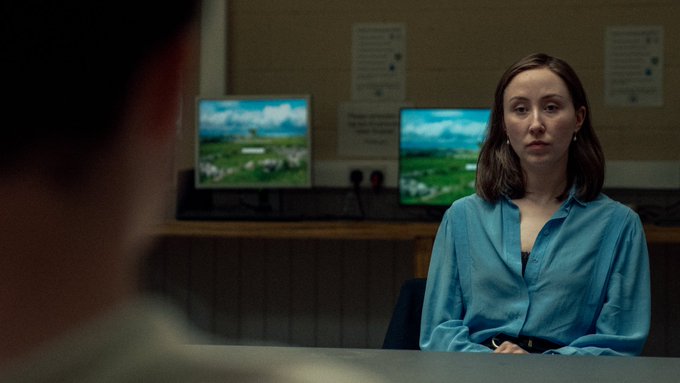
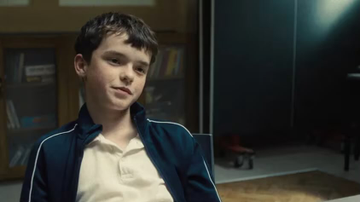
In her single-episode turn as psychologist Briony, Doherty plays the interview room like a tightrope act between professional calm and gut-level horror. She starts with something as simple as a hot chocolate and ends at near-violence, modulating her voice so that you hear, beat by beat, a woman realising this boy might be both a child and a killer. What makes Doherty's guest appearance one of the season's essential performances is how she shows professional training colliding with human revulsion, her character's attempts to maintain therapeutic neutrality gradually crumbling as Jamie reveals details that suggest calculation rather than confusion, every technique she's learned about interviewing traumatized children proving insufficient for someone who might be performing trauma while actually feeling nothing. She plays the slow recognition that she's being manipulated as someone who prides herself on being able to read people discovering she has no idea what she's actually looking at, her confidence replaced by something approaching fear as the interview progresses and Jamie's story stops making sense in ways that suggest he knows exactly what he's doing. Doherty's physicality shifts across the episode, beginning with open body language and soft therapeutic voice before gradually closing in on herself, her professional boundaries erected as protection rather than methodology, the hot chocolate she offers becoming reminder that she's in room with someone who might be dangerous regardless of his age. The episode's climax, where she nearly strikes him after he crosses final line, shows Doherty playing someone whose entire identity is built on helping damaged children discovering that some damage might be intrinsic rather than inflicted, that her frameworks for understanding juvenile psychology might be completely inadequate for this particular case, leaving her shaken and questioning whether she's qualified to determine if Jamie needs help or if everyone around him needs protection from him.
4. Stephen Graham - Adolescence
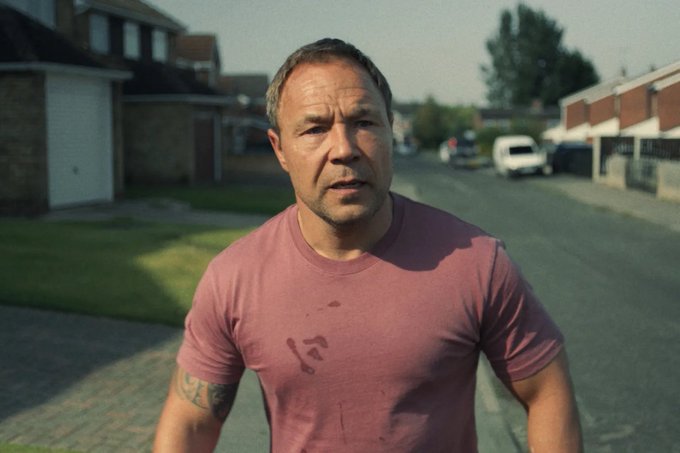
Graham weaponises his usual intensity into something almost unwatchably intimate here, playing a father whose every attempt to advocate for his son makes him look more dangerous. Because he helped develop the show, he seems to know exactly when to pull back; the smallest flicker of pride or shame in his face does more than any courtroom speech ever could. What makes Graham's performance the year's most harrowing is how he shows paternal love as both motivating force and blinding limitation, his character unable to see Jamie clearly because seeing would require acknowledging that his son might be something he can't protect or fix, his denial manifesting as aggression toward anyone who suggests Jamie is anything other than victim of circumstances. He plays a working-class father navigating systems designed to crush people like him, his legitimate rage at institutional classism making it impossible to separate reasonable grievances from unreasonable defenses of the potentially indefensible, every scene showing someone whose trauma and love and class consciousness have created toxic mixture where he can't distinguish between fighting for his son and fighting against reality. Graham's physicality is crucial to the performance, his compact frame radiating threat even in moments meant to demonstrate care, his every gesture suggesting violence barely contained, making clear that Jamie's capacity for brutality might be inherited even as the show refuses to make that connection explicit. The single-take format means Graham has nowhere to hide, his face doing continuous emotional calculus about how much to reveal, when to push back, when to collapse, the format's formal ambition only working because Graham can sustain that level of intensity and authenticity for extended sequences without breaking character or losing emotional specificity. His most devastating work comes in scenes with Owen Cooper, where Graham plays someone trying to recognize his son in this boy while also recognizing that perhaps he never actually knew him, that the child he thought he was protecting might have been performance all along, his love so fierce it's destroying both of them while solving nothing.
3. Rhea Seehorn - Pluribus

Seehorn carries Pluribus with the same razor-sharp inner life she had in Better Call Saul, but now there's no lead to deflect to when things get weird. She plays a woman being pulled across realities with such casual specificity—tiny changes in confidence, humour, even how she sits—that the high-concept stuff feels like a psychological close-up, not a sci-fi hook. What makes Seehorn's work transcendent is how she uses the show's reality-hopping premise to create variations on the same person rather than completely different characters, each version of her across the multiverse reflecting slightly different choices and circumstances that compounded over time to create distinct but recognizably related individuals, her performance making visible how we're all just accumulations of decisions that could have gone differently. She plays political operative whose ability to navigate different timelines becomes metaphor for how politicians perform different versions of themselves for different constituencies, each version real in its way but none entirely authentic, the show's science fiction framework allowing Seehorn to literalize the code-switching and identity fragmentation that contemporary politics demands. Her scenes where multiple versions exist simultaneously crackle with tension as she plays conversations between selves who've made different compromises, some having sacrificed principle for power while others chose integrity over influence, Seehorn making each version sympathetic while also showing how they've all been corrupted or diminished by the systems they've tried to navigate. The performance works on multiple registers simultaneously, functioning as character study, political commentary, and philosophical meditation on identity and choice, Seehorn making abstract questions about free will and determinism tangible through work that shows how tiny differences in circumstances create radically different outcomes while maintaining some essential core that persists across variations. Her finest scenes show her character recognizing herself across timelines and recoiling from or reaching toward those other versions, Seehorn playing both attraction and revulsion toward the roads not taken, making you feel how haunting it would be to actually see your parallel lives rather than just imagining them.
2. Mark Ruffalo - Task
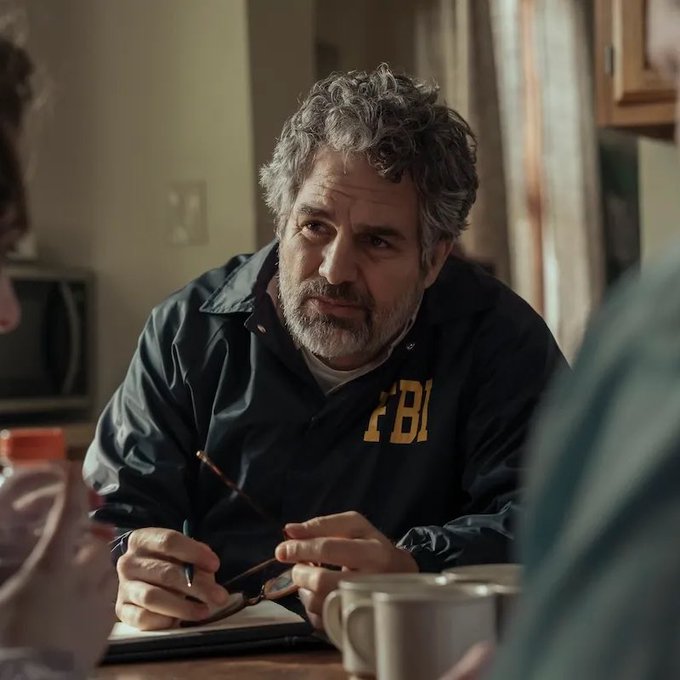
Ruffalo leans into middle-aged exhaustion, building an investigator who looks permanently ten minutes from giving up but whose brain never stops working. His cat-and-mouse scenes with Pelphrey crackle because Ruffalo never plays the "cop speech"; he mumbles, hesitates, and then lands on a line that shows he's three moves ahead. What makes Ruffalo's detective essential viewing is how he shows someone who's solved so many cases that pattern recognition has become both gift and curse, his ability to see how crimes will unfold making him effective investigator but also preventing him from being surprised by human behavior in ways that have left him clinically depressed. He plays someone who's given everything to the job and received nothing back except knowledge that crime is infinite and justice is finite, that for every case he solves ten more go unsolved, that his dedication has cost him family and health while changing nothing systemically, his exhaustion existential rather than merely physical. Ruffalo's chemistry with Pelphrey creates fascinating class dynamic where both men are smart enough to recognize themselves in the other, the detective seeing the criminal as what he might have become under different circumstances while the criminal sees the detective as what he could have been if he'd made different choices, their interactions charged with mutual understanding and fundamental opposition. The performance's greatness lies in Ruffalo's refusal to play brilliance as confidence, instead showing intelligence as burden, his character's ability to anticipate human behavior making him understand why people commit crimes without that understanding translating to forgiveness or cynicism, just weary recognition that systems create criminals as reliably as they create victims, and that his role is to process casualties of inequality rather than prevent them. His best scenes show him solving cases through sheer accumulated experience while simultaneously questioning whether solving them matters, whether arresting individual criminals means anything when the structures creating them remain untouched, his victory in catching Robbie feeling hollow because he knows ten more Robbies are out there making the same calculations about how to survive economic systems designed to keep them desperate.
1. Owen Cooper - Adolescence
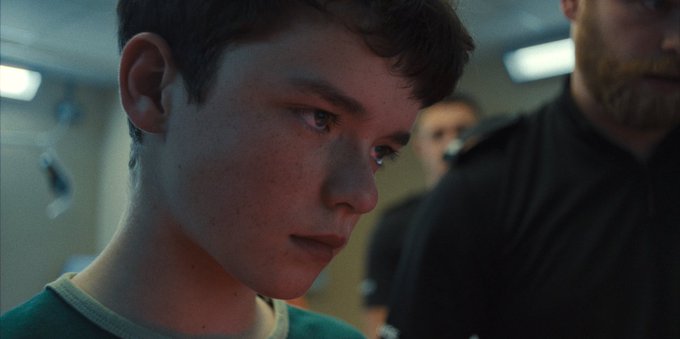
Cooper's debut as Jamie is unnerving precisely because he never chases "evil"; he plays a twitchy, defensive kid whose mask only fully drops in those single-take episodes. Holding an hour-long interrogation in essentially one breath, he lets guilt, fear and adolescent neediness flicker past his eyes so quickly that you're constantly recalibrating whether you believe him. What makes Cooper's performance the year's defining piece of television acting is how he plays truth and manipulation as indistinguishable even to Jamie himself, suggesting adolescent so damaged or disturbed that he's lost ability to separate performance from authenticity, his every gesture calibrated to elicit specific response while also being genuine expression of whatever he's feeling in that moment, creating character who's simultaneously psychopath and traumatized child without ever clarifying which interpretation is correct. He shows Jamie as someone who's learned to read adults and tell them what they want to hear, whether that's remorse or confusion or fear, his performance suggesting intelligence without ever making clear whether that intelligence is being weaponized or is just survival mechanism developed from genuinely difficult circumstances, leaving viewers in same position as the characters interrogating him, unable to determine if they're looking at monster who needs to be locked away or victim who needs help. Cooper's technical achievement in maintaining this ambiguity across single-take episodes that run for full hours without cuts cannot be overstated, the format requiring him to hit precise emotional beats and physical marks while maintaining naturalistic performance that never acknowledges its own construction, his work suggesting someone who's studied how to appear natural so thoroughly that you can't tell where calculation ends and spontaneity begins. His chemistry with Stephen Graham creates devastating dynamic where son and father are trying to convince each other of narratives they both might half-believe, Cooper playing someone who needs his father to see him as innocent while also potentially using that need as manipulation, every scene between them crackling with love and deception intertwined so thoroughly that neither character nor audience can separate them, his performance becoming the season's ultimate question about whether we're all just performing versions of ourselves we think others need to see or if some people perform so thoroughly they've erased whoever they might have been underneath.
— The Cinéprism
Keep reading
31 / 08 / 2026 · 391 reads
10 Best Endings in Film
A curated list of 10 unforgettable movie endings that leave a lasting impact long after the credits roll.
11 / 01 / 2026 · 504 reads
11 Critically Acclaimed Netflix Shows
From royal sagas and psychological thrillers to groundbreaking true crime, discover the 11 essential series that define Netflix's golden era.